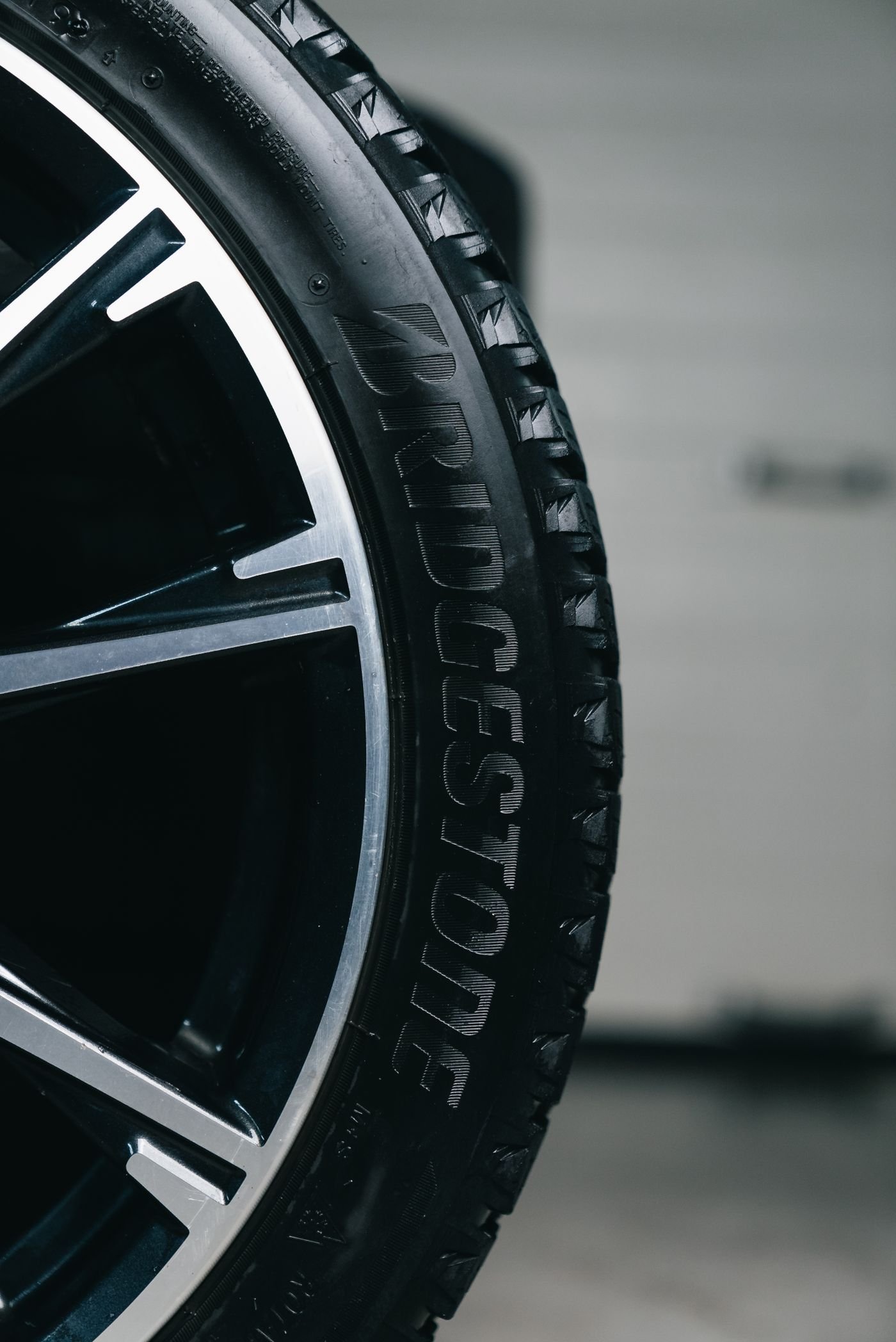
Low Tread
Tread at or below 2/32" can't grip in the wet and needs replacing.

WHAT WE DO
Your tires are the only thing connecting your car to the road — so tread, balance, and pressure matter for safety and fuel economy. From selecting the right new tire to mounting, balancing, and rotating, we handle it all with precision equipment and honest advice.
WARNING SIGNS
Worn or damaged tires are a leading cause of blowouts and long stopping distances. Watch for these.
Tread at or below 2/32" can't grip in the wet and needs replacing.
Sidewall cracking means the rubber has aged and is prone to failure.
A bulge in the sidewall is a weak spot that can blow out without warning.
Wear on one edge or in patches points to alignment or balance issues.
Rubber hardens with age — old tires should be replaced even with tread left.
Humming or shaking can mean cupping, imbalance, or internal tire damage.
WHAT'S INCLUDED
One stop for everything your tires need — from purchase to long-term care.
OUR PROCESS
We measure tread, check for damage, and read your tire pressure and age.
We help you choose the right tire for your car and budget, with upfront pricing.
We mount, computer-balance, and set pressures to manufacturer spec.
We road test for smoothness and confirm your TPMS reads correctly.
FAQS
Replace when tread reaches 2/32", when you see cracking, bulges, or exposed cords, or when tires are older than about six years regardless of tread. Persistent vibration or repeated flats are also reasons to replace.
Insert a penny into the tread with Lincoln's head upside down. If you can see the top of his head, the tread is worn to 2/32" or less and should be replaced. We measure tread precisely on every visit.
Not always. AWD vehicles usually need a matched set, but front- and rear-wheel-drive cars can often replace in pairs. We advise based on your drivetrain and remaining tread.
Yes. Aligning with new tires prevents uneven, premature wear from the first mile. We also balance every tire we install for a smooth, vibration-free ride.